
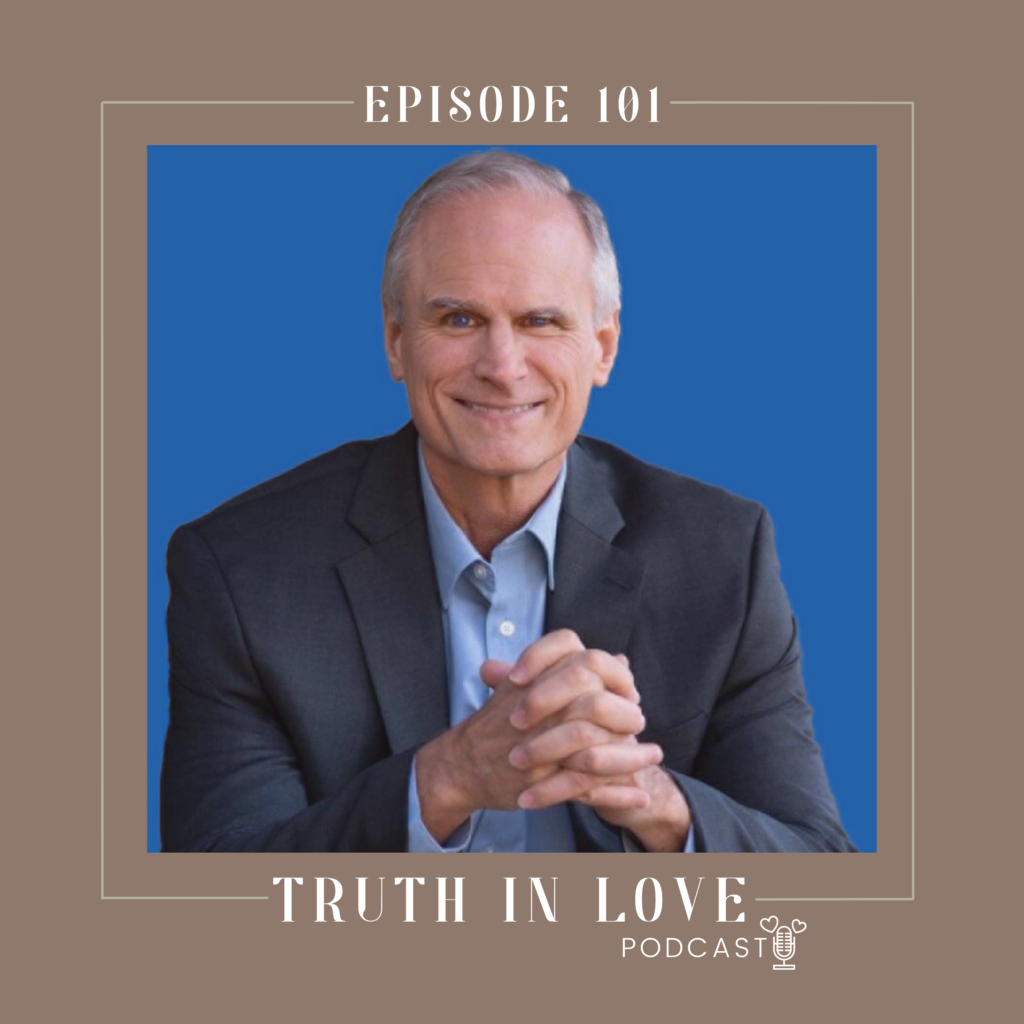








Almost everyone has asked the question, quietly, in an ordinary moment — is God even real? Dr. Patrick Briney asked it louder and longer than most. Raised in a skeptic’s home with a father who trusted only what he could see and touch, Dr. Patrick Briney spent his childhood and teenage years chasing the answer. He tried self-hypnosis at the kitchen table. He studied Eastern and Western religion. He decided by his first week of college that God simply didn’t exist because you can’t find answers about things that aren’t real. And then, completely unplanned, a phone call from an old friend led him to a single conversation that changed everything.
In this episode, Kimberly Faith sits down with Dr. Patrick Briney to hear that story in full of how one conversation, grounded entirely in the Bible instead of argument, took him from a convinced atheist to a man wrestling with doubt for two more years before finally, exhausted, surrendering his life to Christ. So many of us are like Dr. Patrick Briney, circling the same question in our own way, waiting to run out of our own resistance before we finally sit down and rest in what God has already offered (John 3:16 – For God so loved the world that He gave His only begotten Son, that whosoever believeth in Him should not perish, but have everlasting life.). Kim and Dr. Pat talk through his “Four Fundamental Questions” for reaching skeptics, the subtle danger of trying to earn salvation which can only be received by grace, and why knowing about God is never the same as knowing him personally. It’s not that life is short on evidence: it’s that we’re often the last ones willing to stop arguing with it.
Dr. Patrick Briney is an author, speaker, and Bible teacher for practical Christianity. Dr. Briney serves as the First Associate Pastor at Mission Boulevard Baptist Church in Fayetteville, Arkansas. He is also the Founder and President of Leadership Training Institute of America and Life Changing Scriptures. Pat and his wife, Colleen, live in Fayetteville, Arkansas. They have two married daughters and three enjoyable grandsons. You can reach Dr. Briney through his website, https://patrickbriney.com.
Jacob Paul: Welcome to the Truth and Love podcast with your host, Kimberly Faith. The Truth and Love podcast seeks to present God’s timeless truth through the lens of his remarkable love.
Kimberly Faith: Well, it’s great to be here today, with Doctor. Patrick Briney. Welcome to the Truth and Love Podcast.
Dr. Patrick Briney: Oh, thank you very much, Kim. I’m looking forward to our conversation. Really appreciate the opportunity to share my testimony and talk about some things that are really important to me and to many others.
Kimberly Faith: I totally agree. And I want to just let you dive in. But I want to give everybody an idea where we’re going. First of all, we want to hear your story. We want to hear how you got to where you are today and including your education.
And then we also I’m very interested, and I know everybody else will be very interested to hear what you believe are like the primary or the top two or three scientific, ways that kind of just prove that the existence of a creator. And then the third part of this podcast is really talking about taking specific scriptural texts and examining those and then seeing how before science discovered particular things like the world is round, the bible was already talking about it even sometimes a millennia before science figured it out. So that being said, let’s just launch into your testimony.
Dr. Patrick Briney: All right. Well, I was raised in a skeptic’s home. So I don’t have the traditional background or experience that many people did back in the 50s when I started out. What do you mean by skeptic? A skeptic is someone who’s not sure that there is a God or not a God, questions everything.
My dad was an engineer so he was very literal in the way he lived his life and understood the world around him. He believed in things as they were, as he saw them, as he experienced them. There was no reason to believe in a God because as far as he was concerned, God was untouchable and unseen.
Kimberly Faith: He lived basically by his physical senses and perceptions a spiritual element.
Dr. Patrick Briney: That’s
Kimberly Faith: right. So interesting.
Dr. Patrick Briney: Go on. Yeah, that was different than my mom. My mom was not a she believed in God, maybe. She recognized the value of moral upbringing in religion. And so she sent myself, brother and sister to church.
She wanted to send us to some special religious training schools. My dad wouldn’t allow that. He wanted us to grow up and make our choices later in life. And so, yes, I had sort of a mixed background, but God wasn’t really there. God was more like a symbol.
He was an entity that represented goodness in the world. And that was the extent of it. So there was no personal relationship as we understand from the Bible that God wants to have a good personal relationship with us. So that’s how I started out in life. I knew that there was a Bible.
In fact, I had my first Bible in second grade, I believe. And my name was printed on it. And that was the extent of my Bible experience.
Kimberly Faith: So what was the turning point for you?
Dr. Patrick Briney: Well, I had been searching for God. By the time I got into junior high, I started really questioning whether there is a God or not. And I stopped going to the Sunday school down the street. Although Mr. Johansson used to try his best to answer my questions there at the church, a little church that I was being sent to.
Kimberly Faith: What sort of questions were you asking in junior high school?
Dr. Patrick Briney: Well see, this is how I was trained, a little different than most people. When I was sent to church, my dad would send me with questions like, Go ask them who made God. I love that. Does the Bible still use the same words today as when it was written? And so I went with the skeptics questions.
I was sort of the go between middleman. I didn’t understand what was happening.
Kimberly Faith: And like Lee Strobel, right?
Dr. Patrick Briney: Yes, that’s right. So here I am being sent to church to question rather than to receive training. And of course that contributed a lot to my doubts then. I mean, how do we know that there’s a God? But really, a gift.
Kimberly Faith: Yes. What a gift to instead of just floating along with a feel good kind of experience, you really wanted to know the truth.
Dr. Patrick Briney: I did. I did I was not opposed to the idea of God. Mhmm. I didn’t care one way or another whether he existed or not or she existed or not. My thought was, is there a God?
And if there is, what does he expect of me? What does he want me to do? That Those were the two questions that formed in my mind in junior high, carried me through high school. I just want to know.
Kimberly Faith: I read something on your website. And by the way, for anyone listening, Doctor. Briney has a website, patrickbriney.com. Is that right?
Dr. Patrick Briney: Yes, that’s right.
Kimberly Faith: And lots of great information on there. Doctor. Briney is an amazing teacher and answers a lot of the hard questions using the scripture. But one of the things I read on your website was you said your greatest fear wasn’t being wrong, it was believing in something that wasn’t true.
Dr. Patrick Briney: Is that accurate? Almost. Because if you believe something that’s not true, you’re wrong.
Kimberly Faith: I think I took that from your website. Maybe I misread it. You better go look at your website.
Dr. Patrick Briney: I’m just kidding.
Kimberly Faith: I’m totally kidding.
Dr. Patrick Briney: Yes, I need to go look at that. As far as Yes, I didn’t want to believe in something that was not true. And by
Kimberly Faith: the
Dr. Patrick Briney: time I got into high school, I’m thinking, already believed in Santa Claus. I already believed in the Easter bunny and other things that you’re taught as a kid and it turns out not to be true. And yet the kids truly do believe in those things because they are told that. I wasn’t looking for something to believe in. That’s the point.
I wasn’t looking I didn’t need something to believe in. I was happy, I was satisfied, life was going fine. And I just wanted to know if I needed to get ready to meet God or not. That was the nagging question on the back of my mind. And so in pursuing that, by the time I got in high school, I was talking to friends who were Christians or who were religious, some were into Eastern religions.
And I started looking for God through everything, Eastern and Western religions. And I had Here’s the one answer that kept coming back over and over again. Just believe. You see, that’s a problem with me. That’s a problem.
That is okay for those who have been raised in Christian homes or religious homes, because it’s assumed that there is a God, and the God that your family believes in. And so all you have to do is believe. That’s the next point. But my problem was, I didn’t even know if there was a God to believe in. And even if there was a God, I didn’t know which one it was in the world.
So I was really struggling. It was to the point that I was getting it, well I was sort of abandoning religion by the time I was a senior in high school. Religious thought, I started getting into self, maybe sort of some new ageism and some self development of ideas and explanations of supernatural things or unexplainable things in the world. And I started getting into the powers of the mind. And started developing really my own religion, my own religious perspective at that point.
But I was heavy into self hypnotism. And I remember sitting at the kitchen table and I was going One night I was gonna resolve this nagging problem in my heart. Is there a God or not a God? And so I thought, I will put myself into a hypnotic trance and discover God by this means. Oh, wow.
And so I had a candle set up and I stared into it and I kept repeating, there is a God, there is a God, there is a God. Well, I did that for a little while and then, nope, looking in myself, nope, I don’t know that there’s a God. And then I thought, well, maybe I’ll do the other way. And so I stared in the camera set, candle and I said, there is no God, there is no God, there is no God. I got done with that and I, nope, I wasn’t convinced one way or another.
Kimberly Faith: So what was the final turning point? How did you get there?
Dr. Patrick Briney: Well, now there’s a step before that. Okay. Because that was in high school. When I was getting ready to go into college, I was determined, I’m gonna have this question of God. See, it bugged me.
Yeah. It bugged me a lot. And I had determined, I will have an answer one way or another before the first day of class for college. Wow. One week before school started, it suddenly occurred to me, the reason why I can’t find answers about God, Because you can’t find answers about things that don’t exist.
Wow. And that enlightened me. I thought, well, explains everything. That’s why I can’t find God because he doesn’t exist in the first place. That settled my atheism.
Wow. I mean, that made it official right there. It was not a moral issue. I didn’t care whether God existed or not. I didn’t care what his rules were.
If I knew what they were, I would do it. Right. But for me, there was such relief to finally have an answer, to have a rational answer. And now I can explain why I can’t find any answers. And why people just say, believe.
Because they don’t have any answers. And so I went into college that way and then about November towards the end of the quarter, my girlfriend, Colleen at the time, UCLA, she called me up and said, Hey, I wanna let you know, I became a Christian today. And I said, You, what? Colleen and I grew up together. Okay.
We started in junior high. And all those years that I was questioning and talking to friends and people about God, we never talked about it because she didn’t care. She didn’t care if it was Mickey Duck because we just lived about thirty minutes away from Anaheim, Disneyland. And it was of no importance to her. So it wasn’t anything to talk about.
Kimberly Faith: Now Colleen’s family is Japanese, right?
Dr. Patrick Briney: Yes. And she lived next door to her grandparents who were members of the Buddhist temple in Los Angeles. So we always celebrated the New Year’s big Japanese event and we had the rice patties and the tangerine set up around the house and There a lot of was Buddhist influence like there’s a lot of Christian tradition and influence. She gets saved. Became a Christian.
I said, you what? You did what? Why did you do that? And what did you do? And she said, there’s a guy on your campus who can answer your questions.
Oh, wow. And so she gave me the phone number to Chuck Schwartz. Because she’s got an interesting testimony there too. Two particular encounters as a student that got her into a Bible study. Oh wow.
And that’s when she discovered that she needed to get saved. Well, she gave me the number to Chuck Schwartz who was a leader of a particular group on our campus. I called him up and he said, Well, this is unusual. Usually I have to call people. I’ve never had anyone call me.
And so we sat down and in that one meeting, he convinced me that there was God.
Kimberly Faith: Wow. What was the most pivotal part of that
Dr. Patrick Briney: Well, were talking about the laws of thermodynamics and the origin of life and creation design. And it was a very good discussion. And this is a very, very important point that I teach people about witnessing to others. You have to listen to the questions people are asking and answer their questions. Yes.
Not your questions.
Kimberly Faith: That’s you know, that’s so I appreciate you saying that. You know, my undergraduate degree was in education. I remember one thing from four years of education, and it was what you just said. You cannot teach somebody something unless you know where they’re at and listen to their questions. And so that’s such a that’s the reason we do this podcast.
It’s the reason we have the website. And it’s the reason you do because our our overarching purpose is to glorify God, our practical purpose is to bring The only currency to heaven that we ever bring to heaven is souls.
Dr. Patrick Briney: That’s right. Well, in fact, Kim, back early on after I became a Christian, I developed a series of lessons called The Four Fundamental Questions. And that begins at the very root of secularism and skepticism. That first question is, is there more than a physical world? I can show you evidence that there is.
And if there’s more than a physical world, then the next question is, all right, is there a God in that spiritual world? Right. If there is, well then the third question is, which God is it? And then once we determine which God, then the next question is, how does God reveal truth? That establishes a source and foundation from which to find truth and then interpret the rest of the world.
Right. So this brings us down to the biblical worldview with those four fundamental questions.
Kimberly Faith: And it sounds like that study was kind of your experience where you needed to be brought to in order to even believe that the Bible might be even relevant to your life.
Dr. Patrick Briney: That’s exactly right. Chuck brought me to a point of believing that there was a God. I didn’t know which God. But he was a Christian man, he had opened up his Bible. And the first part of our conversation was, oh, there must be a God.
Now, he made a leap a little further than I was ready for. But it still left a tremendous impact on me because we were talking about life and how to, I think, looking back, it’s hindsight and vague memories of that encounter. But he was leading me to understand that I needed to trust in Jesus for salvation. And I would ask questions and he would open up the Bible and read an answer. Now, here’s the significance of this.
Because he answered my question, the main question, is there a God? Now, I wasn’t resistant to hearing him open the Bible and read answers to me. But here’s what astounded me. He was answering my questions from the Bible. That gave direct relevance of Scripture to my life.
Right. I had never seen relevance before. Remember I said earlier that I had a Bible in second grade, and I always had a Bible. And I told Chuck this. And this is the significance of going back to that Bible.
I said, Chuck, I’ve had a Bible all my life. I didn’t know what it was for. And here you are reading answers to my questions.
Kimberly Faith: And you had been in church most of your life.
Dr. Patrick Briney: That’s right. Yeah, that’s incredible. Sunday school primarily, which wasn’t opening the Bible, it was telling stories. I remember the flannel graphs, I remember Samson, and I remember David and Goliath, and all the stories. But for the first time, I asked a question, someone opened the Bible and read an answer that made sense.
I noticed that’s one of the really great things about your website is you spend a lot of time, I can tell you spend a
Kimberly Faith: lot of time figuring out what are the questions people ask and then giving that biblical answer. And it’s a wonderful resource.
Dr. Patrick Briney: Well in fact, there was a period of time I was the online Bible answer man back in the days, even before WWW started coming yeah. On the
Kimberly Faith: That’s interesting. So what happened next as far as your, you know, your action When did you get saved?
Dr. Patrick Briney: Well, during that meeting, I was so astounded by the answers that Chuck was giving me and then seeing the relevance of the scriptures. It was becoming alive to me. I remember Galatians two twenty very well. He read that verse because I asked the question, well, how can you live that way or do that or be that good? As he was describing it, he said, you can’t.
I said, then how does this work? He read Galatians two twenty and said, it’s no longer I that liveth, but Christ that liveth in me.
Kimberly Faith: Boy, that was astounding to me. You know, you really bring an excellent point because I think we as even people who sincerely desire to have people come to know Christ, we tend to sometimes get into our own argument instead of just using the quick powerful word of God that discerns the thoughts and intents of the heart. I’m guilty of that. But thank you for bringing that up because that is so important for us to just be always reminded that it’s God’s word that draws people through this work of the spirit.
Dr. Patrick Briney: That’s exactly right. And it was made relevant because it was the word of God applied to my questions. This is what is so important because as often as I’ve talked to people over the years who don’t have the experience of growing up in a skeptics home, which more and more people are
Kimberly Faith: than they’ve never
Dr. Patrick Briney: been to church. So it’s even more relevant for us as Christians to understand how to reach a skeptic. But as a skeptic, I had my questions that needed to be answered. Here’s a vulnerability that Christians have when they’re raised in a Christian home. They didn’t have these questions so they’re not important to them.
They don’t even think of those questions. And if they do, they dismiss it because all you have to do is believe like they did.
Kimberly Faith: Right. And you think about I mean, you bring up a really good point because, a lot of the majority of most cultural populations across the world are brought up in homes where now the children observe the parents sucked into social media, caught up in cultural political wars. All these things that do not teach you how to think, do not teach you how to question. And if they’re going to to church, a lot of times they’re just doing it for the experiential part of it to have this good feeling. Because God’s word and his presence do give us a good feeling.
Being in nature gives us a good feeling. But we’ve learned to count our feelings as our most important guide instead of the truth or the pursuit of the truth because we’ve never been taught to think. And you were taught to think.
Dr. Patrick Briney: That’s exactly right. I don’t have to think about an answer. I don’t have to have a reason for God if I’ve always believed in him. And here’s what happens to Christians. A lot of kids now, the majority of kids come out of Christian homes, they’ve been raised in churches, they go to college, and then they don’t believe in God anymore.
And the reason for that is, they were not given answers. Right. Because in church and in a Christian home, answers are not necessary.
Kimberly Faith: Yeah, I’d like to add something to that too. I think they weren’t given answers. And the second part of that is they weren’t taught to make the relationship relevant to their lives. That was I was given a lot of answers as a person who grew up in a very good church, Mission Boulevard Baptist Church. But the reason I walked away for and lived a plastic Christian life for so many years was because I never learned to make the relationship with God I never saw the value in it.
And it’s not because there weren’t people around me who showed me that. It’s because I never learned what that looked like for myself. Does that make sense?
Dr. Patrick Briney: Yes, it has to be personalized. And that’s the spirit of God who makes his word and all the experiences personal to us. Until that actually connects, it’s really just religious ritual that goes on in our lives. Yes. And it is the spirit of God that comes upon us and brings the word of God to life and relevance to us.
This is personal. And I like to point out to people that when we share the gospel with someone, we’re simply the messengers. We can do our best to persuade and we ought to. Paul said, We persuade. Right.
And so we do our best. But for all of that persuasion, all that effort, what it comes down to, the Holy Spirit has to take that message and personalize it. And here is the profound significance of that. When someone rejects the message of God that’s been given to them, they’re not rejecting the messenger. They are rejecting God personally.
So when they stand before God at the judgment seat, they can never say, well so and so didn’t really clarify or give me this explanation or I need to hear this or they really didn’t make it a good case to convince me, God will say, My spirit poked on your heart and confirmed that what you heard was true and you rejected me. It’s a personal rejection of God at that point.
Kimberly Faith: Yeah. I appreciate you saying that because I don’t know about you, but like there are people in my life right now that I can think of that I just desperately desire them to be saved. Right? And I I find that the more that I ask the Holy Spirit to intervene in my prayers for that person, the more God’s spirit gives me peace about how he’s working when I’m not part of it. And you’re talking about standing before the judgment seat of Christ or the great white throne judgment, actually, if you’re unsaved.
The you know, if we are giving them the word or praying that someone they respect will give them the word, then to me that gives me a modicum of peace, especially because of Romans chapter one. It says they already have the knowledge of God. He’s revealed himself. It’s not my job and I can’t even do it. It’s the Holy Spirit’s job to force them.
But the power of prayer is the best power we have, and I’ve seen it work. I’ve seen it work in very specific situations where I’ve prayed for somebody instead of trying to convince them, and they’re coming to me kind of like you came to the what was his name? I’m sorry.
Dr. Patrick Briney: Chuck In fact, I got in touch with him this morning again. Did you really? 40 later, now that was last year, I could not find the man. And through social media, someone contacted me and wanted me was making requests. And we got to talk and found out he was with the group that I had been with at Irvine, gave me my start with Chuck Schwartz.
And I mentioned, boy, I’ve been looking for Chuck Schwartz for forty years. I don’t know if he’s still alive or not. He said, well, let me put it out on our group’s bulletin board. Sure enough, he’s down in Florida. What?
I contacted him. It was a
Kimberly Faith: You’ll have to send him this podcast.
Dr. Patrick Briney: Oh, yeah. I told him, that’s why I wrote him this more. I said, Chuck, because it makes When someone out of the blue contacts you, you’ve ministered to, he’s ministered to hundreds of students. I was one passing through his life for a couple years. And he was struggling to remember me.
But I know him. Yeah. Because of that meeting. That was a life changing meeting.
Kimberly Faith: What was his degree in?
Dr. Patrick Briney: I don’t know what his degree was in. Let me finish up something here because you see, I contacted him, made his day of course.
Kimberly Faith: Oh nice.
Dr. Patrick Briney: And then we talked about all the guys that I had been studying with who were leaders in that group. He’s still in touch with them. They connected with me. This wasn’t today? No, no, no.
A year ago.
Kimberly Faith: Oh, a year ago, okay.
Dr. Patrick Briney: A year ago. But I think about them all the time and always have. Right. But I got in touch with Brian Ronk who was the bible study leader that Chuck put me in at the time which was what I needed. Right.
Because they were into Christian apologetics and answering questions, why as well as what you believe. And then there was Mark Zeissmer who was a roommate of mine and that was my connection to Arkansas because his friend came to see him, but saw me instead. Anyway, all these, it’s very very interesting. It’s a lengthy story. But going back to my meeting with Chuck, what he didn’t because you asked me what led to my salvation, what was that point?
Well, that got me on the road, what we call the road to Damascus. Now I was walking that path. So Chuck led me in a prayer. And it was to Jesus. But I could not have told you if it was Jesus who was God or not.
Here’s why I prayed the prayer. And this is another, there’s a lot of important lessons out of this, out of my testimony to help people understand how to be careful and reach people. He led me in a prayer, a written prayer, to be saved. And then I thought I was saved. But here’s why I prayed.
I was thinking, if I don’t pray this prayer, he’ll think I don’t believe in God. I do believe in God now. Interesting. So I prayed the prayer. But see, the prayer really didn’t have much meaning to me other than I believe in God.
Kimberly Faith: Right, right. The devil’s believe and tremble type
Dr. Patrick Briney: thing, That’s right, exactly. So I believed in God, right? Well, I had a problem with struggling with doubt for the next two years. So I went from the struggle of knowing if God existed to the struggle of knowing if God saved me. But I plugged into this group.
He said, Here’s a good group you need to be a part of. They were with Walter Martin’s group, the Christian Research Institute, which dealt with and specialized in giving answers to Christians to know why as well as what you believe. It’s what I needed. And through those guys, they took me to hear a speaker, a creation scientist who spoke on creation. Who was it?
Remember? It was, all I remember, the first name was Tim, but that was back in 1975.
Kimberly Faith: Was this before Doctor. Gisch became kind of a thing?
Dr. Patrick Briney: No, Doctor. Gisch started in the 50s.
Kimberly Faith: Oh, did he? He’s been
Dr. Patrick Briney: around a long time. Okay. And Doctor. Gish and I had a very good talk here. I brought him to Fayetteville.
I remember that. Yeah.
Kimberly Faith: Yeah.
Dr. Patrick Briney: And he was the bulldog of creation science and creation science says a lot to owe to him and Henry Morris because he, Gish and Morris are the two guys that established creation science where it is today. Interesting. Yes, basically gatekeepers against the onslaught of atheism and evolution and secularism attacking Christianity back in the day. This man that I heard speak, he was saying things, he was talking about evolution and biology, sort of like the Paul Harvey days of, now for the rest of the story. And as he was talking, was thinking, yeah, I’ve seen that in my books.
Oh, but they didn’t tell me that. Oh, right. And I left that seminar thinking, what else have I not been told? And that sowed seeds of doubt. My doubt about evolution.
Kimberly Faith: At this point, what was your goal career wise?
Dr. Patrick Briney: Well I was at Irvine, at UC Irvine, you were a pre med major. It wasn’t a biology degree. But you were on a pre med track. And so that’s why I had gone there. And was just down the heart The science.
The heart sciences.
Kimberly Faith: The heart sciences, right.
Dr. Patrick Briney: So that’s what I was doing. And in biology, the school is set up, it’s why there can’t be a God. It’s not just teaching evolution. Back in the days, and I don’t know what they’re teaching these days there, probably hasn’t changed much. But it was a bastion for atheism actually.
Well, taught evolution as a fact when I was in school.
Kimberly Faith: Yes, well,
Dr. Patrick Briney: that’s right.
Kimberly Faith: Yeah, mean, was like, wasn’t even They didn’t use the word theory that I remember.
Dr. Patrick Briney: They still teach it that way. But in the larger picture here, and evolution is significant because when Darwin came up with the finches in the Galapagos Island ecosystem there, he was giving what appeared to be evidence to make evolution a credible thought. It existed before Darwin. But I Darwin added didn’t know that. Yes, added the missing credibility key to make this thing really legitimate.
And when he did that, even though looking in hindsight and even before he died, he said, We’re still missing the evidence. A lot of the predictions he made were not fulfilled. But it was exactly what all the atheists and skeptics needed, and they took the ball and ran with it. Right. So, in other words, skepticism and atheism preceded evolution.
Kimberly Faith: Right, well yes, of course.
Dr. Patrick Briney: The reason why I’m saying that is going back into the 70s here, at Irvine, we were not only taught evolution as a fact in biology, but in our literature classes, our philosophy classes, our history classes, they all dealt with the theme in our freshman year, why there can’t be a God. That’s so remarkable when you consider that
Kimberly Faith: the institutions of higher learning that were founded with this country, Harvard, Yale, were all Christian based, All Christian based universities. That’s two fifty years ago. And when you were in school, it was even less than that. It’s remarkable how far we can fall in two hundred years.
Dr. Patrick Briney: Well in fact, American education system was built on the premise that it’s necessary to educate our children in the ways of God, in the ways of Christ, in biblical training. You look at the early primer, it was all scripture. And that’s how kids were trained and educated.
Kimberly Faith: You know, I listening was to Booker T. Washington’s autobiography. And one of the things he said about the older freed slaves was that they all everybody wanted to learn how to read. And he said the the only reason the the older freed slaves wanted to learn to read is so they could read the bible.
Dr. Patrick Briney: Right.
Kimberly Faith: So interesting.
Dr. Patrick Briney: Right.
Kimberly Faith: So and of course, you know, that’s only that’s that’s not 200 years ago. Only That’s 150 years ago or so, or not less, a little less than 150 years ago.
Dr. Patrick Briney: Well you know, that’s interesting because the correlation there is our founding fathers believed that the only way to preserve freedom, liberty, was to understand scripture.
Kimberly Faith: Yeah. Because
Dr. Patrick Briney: that was the basis for it. That’s why they said, we gotta train our kids how to read. That’s right. And read the Bible and learn it.
Kimberly Faith: It’s a republic if you can keep it because it’s only good for immoral people.
Dr. Patrick Briney: That’s right.
Kimberly Faith: And morality, course, like you’re talking about is that if you don’t have a foundation that is a consensus on the truth, then you don’t have a consensus for what is right and wrong. And if it’s according to what man says, then it’s always changing. But if it’s according to an unchanging God, then you have some stability. So, so I can already tell this podcast is shaping up to be two podcasts, just so you know. So I think what we’re gonna do, we’re gonna we’re not gonna pivot right now.
We’re gonna I want you to finish your story. And, and then what we’ll do is we’ll we’ll start the second podcast with what we kind of had originally thought we were gonna do today in the first podcast. But let’s go ahead and I’d like for you your story is just so rich because I suspect there are so many people who are listening to this who either can identify personally with your journey or know somebody who could identify with it. And so I’d like like for you to pick up. You mentioned you’d started studying under doctor Walter Martin and that you still had this question about whether you were actually born again or not.
Can you pick up that thread?
Dr. Patrick Briney: Well, that was the creation or the Christian Research Institute. Had But Okay. He started that, right? Doctor. Martin started that.
Kimberly Faith: Okay.
Dr. Patrick Briney: And he was the Bible answer man. He was on the radio. He was the go to guy as far as Christian apologetics were concerned. You have people like William Lane Craig today who have taken up that banner. But Martin’s group was there in Orange County, California where I was studying at Irvine.
And these boys that I was with, they were studying over at Melody Land and Doctor. Montgomery, a philosopher, historian, Christian man, he was teaching there. There. Thursday nights we would go for study on the book of Romans with the Positino family. Gretchen Positino was the secretary for Walter Martin.
And her husband was a big time apologeticist. So anyway, that was our direct connection. Okay. So Thursday nights was the training and then we had our Bible study during the week with our group. And then we did a lot of witnessing and evangelism on campus.
And most of that was dealing with the cults. Back in the 70s, I would say it was thought at the time that the densest population of cultic false religion entities that exist in The United States were all concentrated in Orange County, California.
Kimberly Faith: Oh, interesting.
Dr. Patrick Briney: Yeah. Wow. And we were hitting everything. So weren’t dealing with skepticism and atheism as much as we were all So the other cultish what I learned there was the two main principles, two main doctrines that you really have to be prepared to defend well from the Scripture is who saves you and how he saves you. That is Jesus Christ is God.
If you don’t believe in the God of the Bible, then you’re not going to the right person to get saved. And you have to be saved by grace, kept by grace, or you’re introducing works to salvation, you’re not saved. Right. So those were two things I could defend. But here’s an interesting experience, Kim.
I mentioned that I prayed that prayer. But see, that’s what we call a false profession of faith. I didn’t know who I was really praying to. I knew the name, the word. But there was no repentance in my heart.
It was just, okay, I believe in God. So I had a period of time where I was praying and praying and praying for the next two years, and doubting and struggling with I wonder if I’m really saved. We would go to these conventions with our group and staff would get up afterwards, after we’d go on a big evangelism campaign, they’d come back. And we had staff standing up and saying, I got saved. Wow.
Now, when your own teachers are getting saved, you can imagine what the rest of
Kimberly Faith: us are thinking. Well, think also, you you bring up a valid point because I think there are a lot of I’ve been to several churches who claim to be like evangelical churches and they lead people in this prayer at the invitation and and have the whole church pray it together so people don’t feel awkward. It negates the whole idea that you have to know you need a savior and the idea of repentance before it’s not just easy believism. It’s just not I believe in Jesus. It’s why do you think when you believe like, I love the example.
And I actually we actually did a podcast about it because it was such a good example that you gave in churches kind of on the fly one day about trusting in God isn’t trust unless it’s a 100%. You know? I mean, you sat in that chair you’re sitting in, not with any trepidation, and that’s the way we’ve got to believe in Jesus Christ. And and that’s called faith. Right?
But we don’t sit unless we think we need to sit. And that’s kind of the whole cycle that I’m hearing you say.
Dr. Patrick Briney: Right. Well, I use the word repentance here because when I sat down in the chair, when I actually believed what Christ said, his promises, and took it to heart, that was repentance. Because repentance is changing what you believe.
Kimberly Faith: That’s right.
Dr. Patrick Briney: When Jesus said, except you repent, you shall all likewise perish in Luke thirteen:three, he wasn’t introducing an additional criteria or condition for salvation, he’s still believing. Right. So that’s why we know repentance is believing. But it’s believing something different than what you already believe. I didn’t believe in Jesus Christ, now I believe in Jesus Christ.
Didn’t believe in God’s will being best for me, but now I do believe.
Kimberly Faith: But you also didn’t believe you were a sinner in need of grace if you had believed that, you would have been saved. Yeah.
Dr. Patrick Briney: That introduces a very very important part of my testimony here. Because even though I was defending salvation by grace, kept by grace, with all the apologetics training, I could argue and debate the point very strongly with cult member or false teachers. But I had the subtlety of works. So I had the doctrine down. It was head knowledge, but it wasn’t translating completely and totally, 100%, in my heart.
And here’s what I mean by that. I came to Arkansas, this is when I was finding out and going through another journey of just putting everything that I had been learning out in California, start putting it together in a systematized way in what we call Bible concepts. Which just opened the doors even further to what I had learned because when you can connect the dots, now you can reason and understand and go beyond what you’re thinking today.
Kimberly Faith: Right. It’s the difference between knowledge and wisdom. That’s right.
Dr. Patrick Briney: Yeah. So that was a breaking point for me. But during the next several months, I was struggling with this doubt that I brought from California. Am I saved? Am I saved?
Under the preaching about trusting God completely and totally, and wanting to get this issue of doubt off of my mind, out of my heart, there was a sermon that was given. Our pastor had sat down in the chair, used the chair illustration. And when he sat down and rested, I thought, oh man, I don’t know that experience. Oh, interesting. So I went home.
That was that here in Fayetteville? Yes, I was in Fayetteville in Arkansas. I went home to the dorm there and I was laying on the bed praying and asking God to help me get rid of this doubt and to trust him. Now, what I had been doing for the last couple of years was, am I sincere? Am I sincere enough?
Am I praying? Did I get all the words? Am I repented? Am I calling? Am I believing?
So I’m going through the checklist, right? And the question of the checklist is always, was that enough? Was that enough? Was that enough? Was that enough?
And there’s only one answer from God.
Kimberly Faith: No. No. That’s so interesting because that is exactly what happened to me. And ironically, it was you, your sermon. I was sitting in church, standing in church during invitation, and I’ve been wrestling with God, made several professions of faith, 22 years old.
And I’d always ask, Lord, save me and I’ll be good. It was that was my prayer. And it was at that moment that I don’t even know what you said, but it was at that moment I realized I just needed to surrender. I need to sit in the chair. And it was like, Lord, I’m done.
I’m done trying. I’m done struggling. I’m done. Take me. I’m yours.
I need you. And it goes back to the first beatitude. Blessed are the poor in spirit. Yes, blessed are the poor in spirit, right? Because unless you know you’re spiritually bankrupt
Dr. Patrick Briney: I have nothing to offer. What will I do for me?
Kimberly Faith: So I’ve never heard this story about your own personal So testimony anyway, sorry.
Dr. Patrick Briney: Well, that’s where a lot of my messages have come from is out of my as it always is, out of our personal stories.
Kimberly Faith: Exactly.
Dr. Patrick Briney: So there I was struggling with the doubt. I was on the bed praying and going through the checklist and struggling. When you said you finally gave up, see this is where God broke me down. Now, it’s very difficult for me to say I quit. I just don’t.
Right. And I struggled over that little issue. I say little issue is preventing me from being saved. I’m not gonna quit. I can’t quit.
I can’t quit. Uh-huh. And so I continued to the point of exhaustion. I had tests coming up the next day that I knew about and I came to a point, I’m laying there, I’ve been go it must have been a couple hours. I was laying there tired, exhausted.
Said, Lord, I really hate to do this. But I gotta give up. I quit. And it was just like that. Worst.
Kimberly Faith: Did it scare you almost?
Dr. Patrick Briney: No, no, it’s It’s what it Here’s what happened. It was like, that’s what I was waiting for. It was a realization and I’m going, oh, you know, my eyes pop open. Have this flash of enlightenment and I think, I’m saved. Man,
Kimberly Faith: It’s I am almost like you’ve been in the chair position for two years and then you finally sit I can’t say exactly. Your There side is on
Dr. Patrick Briney: were thoughts going through my mind. Of course I’m saved. What don’t I believe? Believe everything. I want God’s will.
Mean, How may not be could it be so hard and so easy at the same time? I’m going through this, being the skeptic that I am. After this realization soaking in, I had to test it. I said no. So I got up and I started walking around the room saying, trying to talk myself out of it.
You’re not saved, you’re not saved, you’re not saved. Now, those words are very very scary to someone who doubts. Right. I kept telling myself, you know, was like, and I thought, nope, I’m saved. I mean, I can’t talk myself out of it.
This has It’s
Kimberly Faith: almost like you saying, I’m dead, I’m dead, I’m dead. And when you’re alive walking around That’s talking, right. You Yeah, that’s such an interesting story.
Dr. Patrick Briney: See what happened that night, that settled that nagging doubt. And this is why I call it the subtlety of works. I knew works could not save me. Right. I could defend that.
I saw it in the scriptures, it’s by grace, not by works. But it was subtle. And this is, I have shared my testimony at a number of churches. Invariably I have someone come up and say, man, this is exactly what I’ve been struggling with. I’ve had pastors and pastors’ wives who have come up and said I’ve struggled with that.
It’s the subtlety, it works. Whenever you ask the question of God, was it good enough, God? The answer will always be no. That’s why it has to be by his grace. And he has to do it because only he can do it sufficiently.
Right. And then it’s done enough.
Kimberly Faith: That’s You know, when we went through the I call them the attitudes of Christ, the beatitudes study, that blessed are the poor in spirit is not just for salvation, but it’s for Christian walk as well. We are bankrupt without God completely. We can’t sit here and have this wonderful time together without God, you know, because we don’t have even life or breath without him. And I I love that you that the way you’ve expressed that, I’m sure there’s a lot of people listening who struggle just like we have. I mean, same struggle because we’re so it’s so ingrained by the enemy for us to think that we have to earn in order to be accepted.
We’ve gotten that from our parents. We’ve gotten that from our teachers. And everybody’s flawed. It’s not I’m not casting blame. We’re just all so flawed.
But God and his perfection snow. No. You can’t measure up ever, But I’m gonna give you everything you need, just say yes.
Dr. Patrick Briney: Well, it points to the fact that we are very complicated beings.
Kimberly Faith: Yes, we are.
Dr. Patrick Briney: There’s a lot of complications and it’s difficult. In fact, would be inaccurate to point to any one reason why people reject God. Yeah. And that is something that we have to It goes back to how we started out. And that is, we need to listen to people and what their questions are and where they’re at.
And this is one of the things that makes the four fundamental questions so valuable. For example, if I’m talking to a Muslim, I don’t have to talk about the physical, spiritual world. Right. I don’t have to talk about the existence of God. We’re talking about which God?
Yes. You’ll see, I know his starting point.
Kimberly Faith: Right, right.
Dr. Patrick Briney: That’s why I say, if you get the answers to the four fundamental questions down, 80% of your evangelism is done.
Kimberly Faith: That’s
Dr. Patrick Briney: right. Because you have identified where they are and now where your starting point is in the conversation and what to do.
Kimberly Faith: Well, think that’s definitely inspired by God, that whole idea of going through those four fundamental questions. I’m actually gonna go back to your website and look at that again because I think it’s worth committing to memory. You know, we have to not just have the biblical knowledge, but the wisdom that comes from the spirit to use it, and then it needs to be alive in our own lives. And what I’d like to do right now is, I’d like to kinda just wind this one down and and just with a preface for next the next podcast with you. And that would be to kinda pick up with your journey because you this your story of salvation, how you got there is just it’s so powerful.
But I’d like to to kinda give people preview. I’d like for the next podcast with you, if it’s okay, I’d like to start with, kind of the rest of your journey up and kind of get into the scientific thing. We were gonna talk about in this one but we didn’t quite get there.
Dr. Patrick Briney: We’re really talking about what is real. And for me, I needed to know that there was really a God. And then after I determined that there really was a God, established a relationship with him. The next part of my story is I wanna see God really in action. And that brings up a testimony of prayer at that point.
Kimberly Faith: Yeah. And you have lots of God in action stories and I’d like to talk about those next time. Thank you, Pat.
Dr. Patrick Briney: Thank you.
Kimberly Faith: Hey, friend. If this podcast lifted your heart or challenged your faith, imagine what God can do when you dive even deeper. That’s exactly what you’ll find at gofaithstrong.com, a growing hub of podcast, devotionals, music, and resources to help you stay strong in your walk with Christ. We’re all about helping you live your faith out loud, not just once a week, but every single day. You need a boost in your quiet time?
Struggling to stay grounded in the truth? Looking for a community walking the same path? It’s all there. It’s all created to point you to Jesus. And if this episode encouraged you, would you do us a quick favor?
Every like, follow, and share helps us reach more people with God’s truth. Join us in the mission by spreading the word today. Hallelujah. He rescued me.